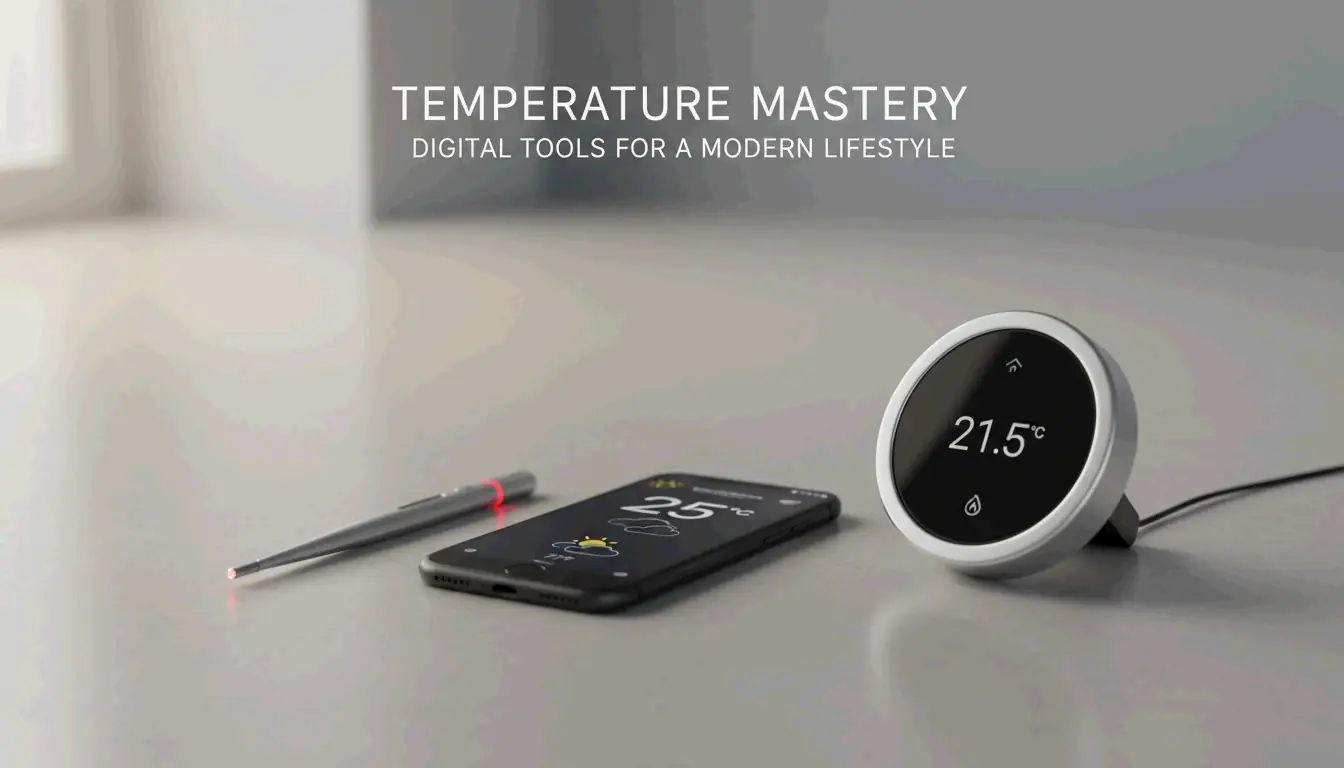
Temperatuurconversiehandleiding: Formules, kalibratie en schaalverwijzing
Converteer tussen Celsius, Fahrenheit en Kelvin met deze kernformules: °F = (°C × 1.8) + 32, °C = (°F − 32) / 1.8, K = °C + 273.15. Voor maximale nauwkeurigheid, kalibreer digitale thermometers met de IJspuntmethode (0°C / 32°F) minstens wekelijks.
Kernconversieformules
| Van | Naar | Formule | Voorbeeld |
|---|---|---|---|
| Celsius | Fahrenheit | °F = (°C × 1.8) + 32 | 40°C = (40 × 1.8) + 32 = 104°F |
| Fahrenheit | Celsius | °C = (°F − 32) / 1.8 | 68°F = (68 − 32) / 1.8 = 20°C |
| Celsius | Kelvin | K = °C + 273.15 | 25°C = 298.15 K |
| Fahrenheit | Kelvin | K = (°F − 32) / 1.8 + 273.15 | 32°F = 273.15 K |
| Celsius | Rankine | °R = (°C × 1.8) + 491.67 | 0°C = 491.67 °R |
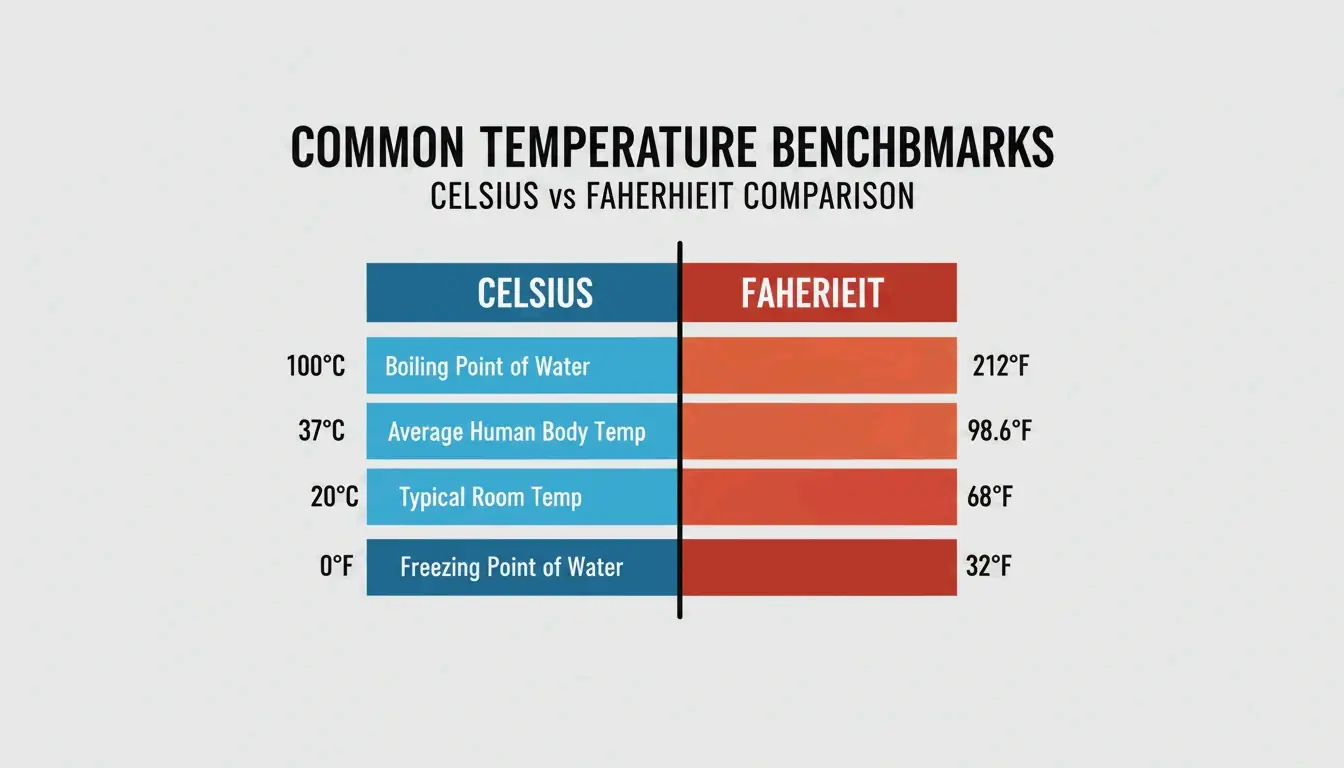
Belangrijke temperatuurreferentiepunten
| Punt | Celsius | Fahrenheit | Kelvin |
|---|---|---|---|
| Water bevriest | 0°C | 32°F | 273.15 K |
| Kamertemperatuur | 20°C | 68°F | 293.15 K |
| Lichaamstemperatuur | 37°C | 98.6°F | 310.15 K |
| Water kookt (zeeniveau) | 100°C | 212°F | 373.15 K |
Mentale snelkoppelingen voor snelle schattingen
Als je een snelle schatting nodig hebt zonder rekenmachine:
Snel & simpel: Verdubbel de Celsius en tel er 30 bij op.
| Werkelijk | Snelkoppeling | Afwijking |
|---|---|---|
| 20°C = 68°F | (20 × 2) + 30 = 70°F | +2°F |
| 30°C = 86°F | (30 × 2) + 30 = 90°F | +4°F |
| 10°C = 50°F | (10 × 2) + 30 = 50°F | 0°F |
Voldoende voor weer- en reisbeslissingen. Gebruik de exacte formule (C × 1.8) + 32 voor koken, wetenschap of medische contexten.
Voor digitale conversie verwerken browsergebaseerde tools zoals FastTool Temperature Converter alle vier de schalen (Celsius, Fahrenheit, Kelvin, Rankine) direct. De Tootoolz Temperature Converter werkt offline — handig voor afgelegen locaties en vluchten.
Thermometerkalibratie: De IJspuntmethode
Digitale thermometers gaan in de loop der tijd afwijken door batterijverlies of fysieke schokken. De IJspuntmethode is de standaard kalibratieprocedure.
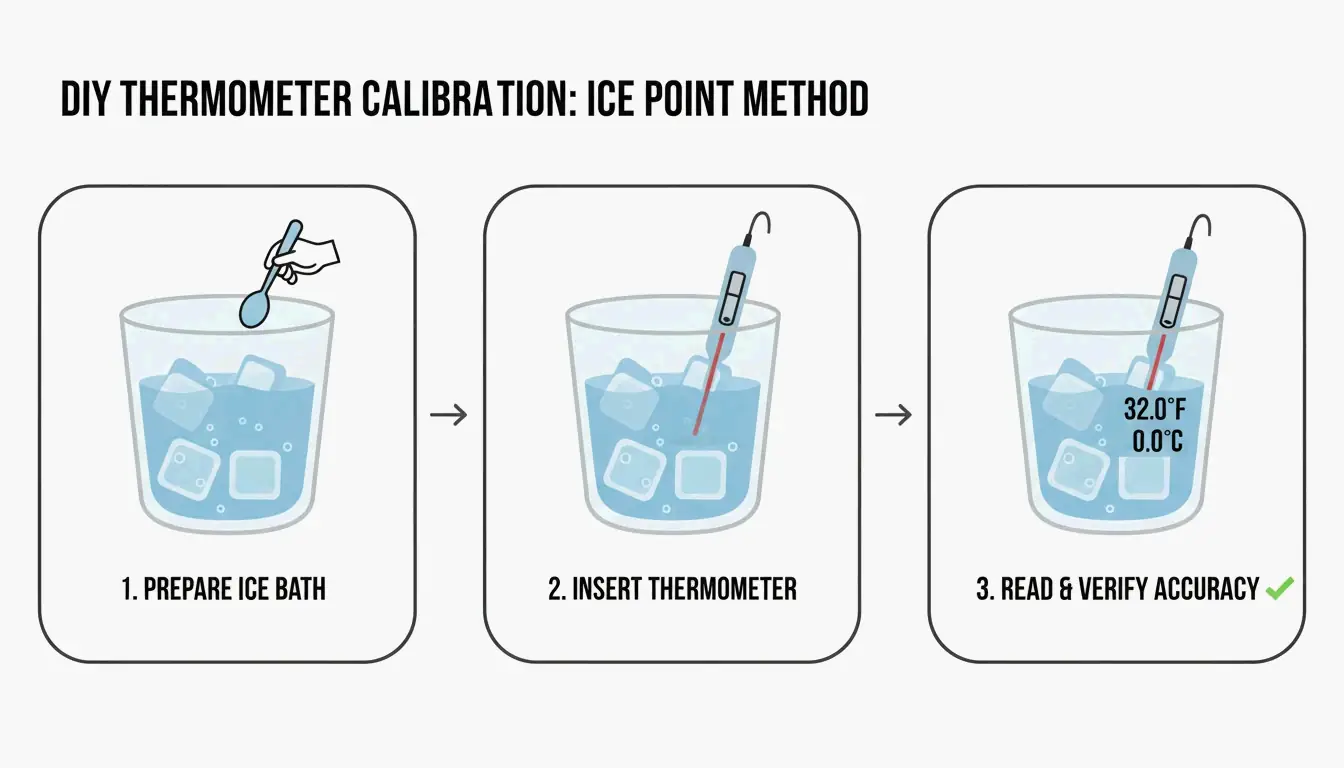
Stappen (volgens Paddl):
- Vul een lang glas met gemalen ijs, voeg koud water toe om de ruimtes te vullen.
- Roer 30 seconden voor thermisch evenwicht.
- Plaats de probe in het midden — raak de zijkanten of de bodem niet aan.
- Verwachte aflezing: 32°F (0°C). Bij een afwijking van meer dan ±1.8°F (±1°C), pas de kalibratie-offset aan.
Kalibratiefrequentie: Wekelijks voor keukenthermometers die dagelijks worden gebruikt. Onmiddellijk na het laten vallen van het apparaat of blootstelling aan extreme temperatuurschommelingen (bijv. vrieskelder → hete oven). Professionele keukens moeten een kalibratielogboek bijhouden voor gezondheidsinspecties.
Voor professionele nauwkeurigheid, gebruik NIST-traceerbare apparaten — nauwkeurigheid gecertificeerd tegen het National Institute of Standards and Technology. Zoals Helen Rosner rapporteerde in The New Yorker, kan een oven die slechts 25°F afwijkt van de weergave een hele baksessie verpesten.
Gereedschapsselectie per toepassing
| Toepassing | Aanbevolen gereedschap | Nauwkeurigheid | Kenmerk |
|---|---|---|---|
| Weer/reis | FastTool (browser) | Exact | Alle 4 schalen, direct |
| Professionele keuken | Thermapen ONE | ±0.5°F | 1-seconde aflezing |
| Afgelegen/offline | Tootoolz (mobiele app) | Exact | Werkt zonder internet |
| Laboratorium/wetenschappelijk | NIST-traceerbare probe | ±0.1°F | Gecertificeerde kalibratie |
| PC-hardwaretuning | AMD Ryzen Master | Realtime | CPU-throttling-waarschuwingen |
Zoals Dr. Elena Marquez van EastWest Studios opmerkt: “Temperatuurnauwkeurigheid is niet zomaar een detail — het is een veiligheidsvereiste.” Dit geldt in gelijke mate voor HACCP-voedselveiligheidsnormen en PC-thermaal beheer. Club386 rapporteert dat de Curve Optimizer van AMD Ryzen Master het stroomverbruik met 18,8% verminderde en tegelijk de prestaties met meer dan 5% verhoogde.
Programmeerbare thermostaten en energiebesparing
Het Amerikaanse Ministerie van Energie rapporteert dat het terugdraaien van een programmeerbare thermostat met 7°–10°F gedurende 8 uur per dag tot 10% per jaar bespaart op verwarming en koeling.
| Seizoen | Instelling | Wanneer |
|---|---|---|
| Winter (wakker) | 68°F–70°F (20°C–21°C) | Thuis |
| Winter (slapen/weg) | 58°F–60°F (14°C–16°C) | 8+ uur |
| Zomer (thuis) | 78°F (26°C) | Thuis |
| Zomer (weg) | 85°F+ (29°C+) | Buiten |
Opmerking: Warmtepompsystemen vereisen gespecialiseerde “setback”-thermostaten om efficiëntie te behouden tijdens temperatuurherstel.
Conclusie
Gebruik de exacte formules voor precisiewerk, de snelkoppeling “verdubbel en tel er 30 bij op” voor weerschattingen, en kalibreer hardware-thermometers wekelijks met de IJspuntmethode. Voor digitale conversie, bewaar een betrouwbaar gereedschap zoals FastTool in je bladwijzers. Voor energiebesparing levert een programmeerbare thermostaat met een 7°–10°F setback tijdens afwezige uren meetbare jaarlijkse besparingen op.
Veelgestelde vragen
Hoe kalibreer ik een digitale voedingsthermometer?
Vul een lang glas met gemalen ijs en koud water. Roer 30 seconden. Plaats de probe in het midden zonder de zijkanten of bodem aan te raken. Pas de kalibratie aan tot het display 32°F (0°C) toont. Herkalibreer wekelijks of onmiddellijk na het laten vallen van het apparaat.
Wat is de snelste mentale schatting van Celsius naar Fahrenheit?
Verdubbel de Celsius en tel er 30 bij op. Voorbeeld: 20°C → (20 × 2) + 30 = 70°F (werkelijk: 68°F). Nauwkeurig binnen ±4°F voor temperaturen tussen 0°C en 40°C. Niet geschikt voor koken of wetenschappelijk gebruik.
Wordt 13°C als koud beschouwd?
13°C (55.4°F) is “koel” of “fris” — typisch lenteweer of herfstweer. Comfortabel voor wandelen met lichte kledinglagen: T-shirt plus vest, licht jack of overhemd, met een lange broek.
SectoJoy
• Indie Hacker & DeveloperI'm an indie hacker building iOS and web applications, with a focus on creating practical SaaS products. I specialize in AI SEO, constantly exploring how intelligent technologies can drive sustainable growth and efficiency.