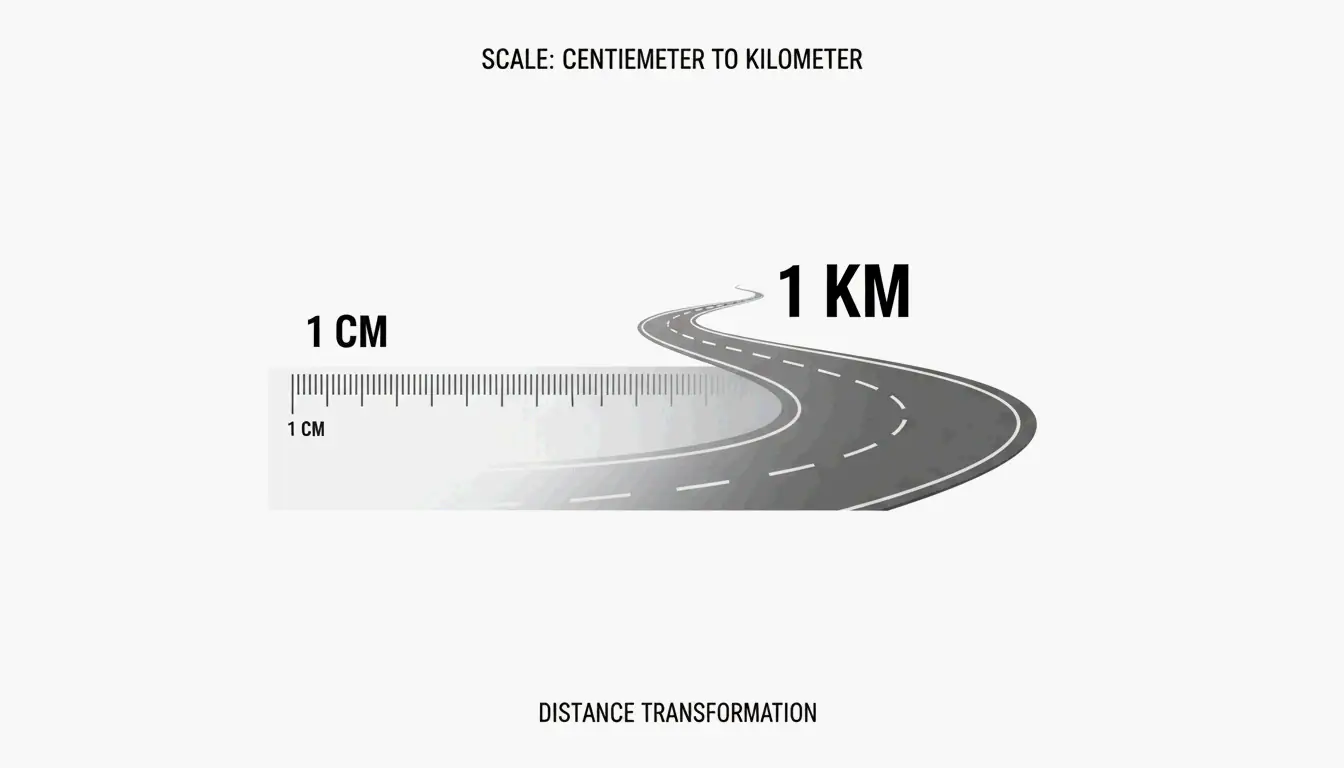
Santimetreyi Kilometreye Nasıl Dönüştürülür: Formüller, Örnekler ve Görsel Kılavuz
Santimetreyi (cm) kilometreye (km) dönüştürmek için 100.000‘e bölün. Formül: km = cm ÷ 100.000 (veya km = cm × 0,00001). Örneğin, 250.000 cm = 2,5 km. NIST‘e göre dönüşüm faktörü tam olarak 10⁻⁵‘tir.
Dönüşüm Formülü
| Yöntem | Formül | Örnek |
|---|---|---|
| Bölme | km = cm ÷ 100.000 | 500.000 cm = 5 km |
| Çarpma | km = cm × 0,00001 | 500.000 cm = 5 km |
| Ondalık kaydırma | Ondalık noktayı 5 basamak sola kaydır | 250.000 → 2,5 km |
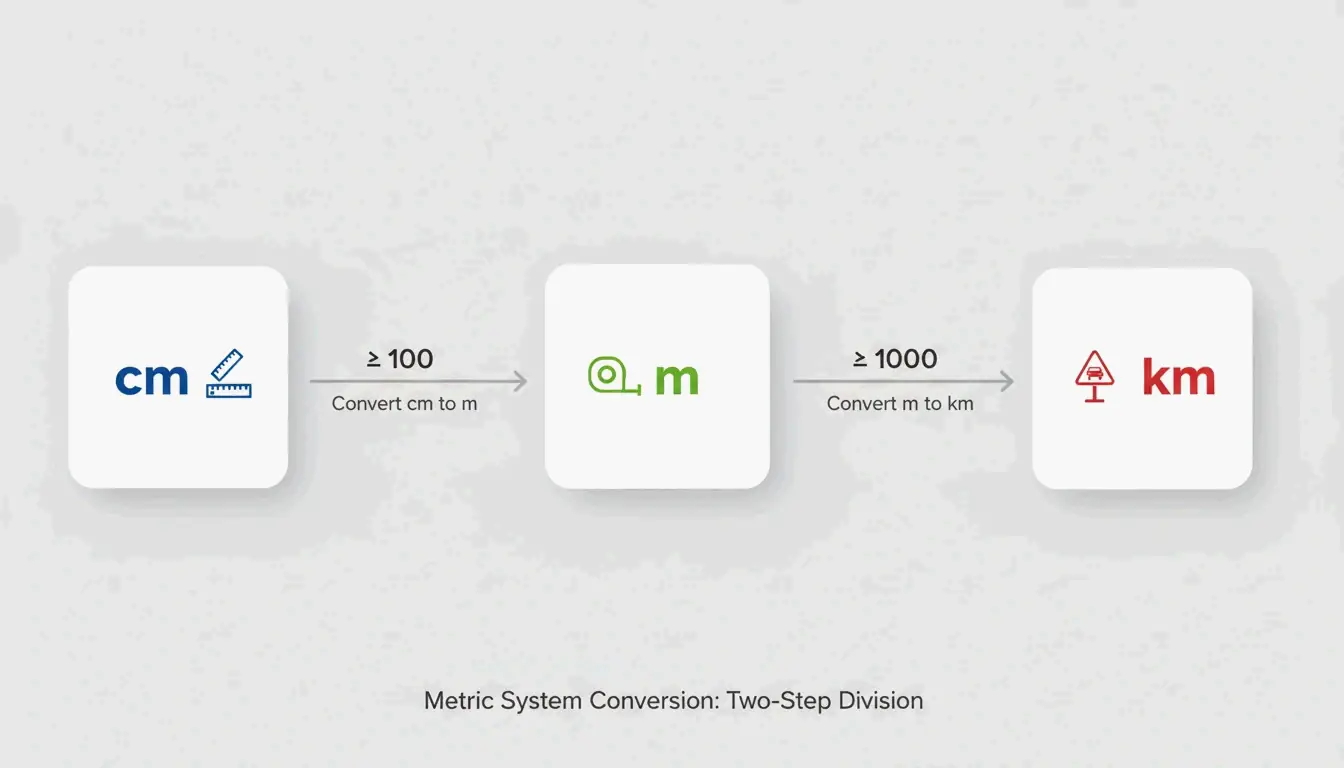
İki Aşamalı Yöntem (metre üzerinden)
- cm → m: 100’e böl (örn. 100.000 cm = 1.000 m)
- m → km: 1.000’e böl (örn. 1.000 m = 1 km)
Hızlı Dönüşüm Tablosu
| Centimeters | Kilometers | Scientific Notation |
|---|---|---|
| 1 cm | 0.00001 km | 1 × 10⁻⁵ km |
| 100 cm | 0.001 km | 1 × 10⁻³ km |
| 1,000 cm | 0.01 km | 1 × 10⁻² km |
| 10,000 cm | 0.1 km | 1 × 10⁻¹ km |
| 45,000 cm | 0.45 km | 4.5 × 10⁻¹ km |
| 100,000 cm | 1 km | 1 × 10⁰ km |
| 250,000 cm | 2.5 km | 2.5 × 10⁰ km |
| 1,000,000 cm | 10 km | 1 × 10¹ km |
Metrik sistem neden bu ölçeği kullanır
Metrik sistem ondalık tabanlıdır ve uzunluk birimleri için ISO 80000-3 tarafından yönetilir. Santimetre küçük nesneleri (düğme genişliği, kalem kalınlığı) ölçer. Kilometre coğrafi mesafeleri (yol uzunluğu, şehirler arası) ölçer. 100.000:1 oranı her iki ölçeği de yönetilebilir tutar.
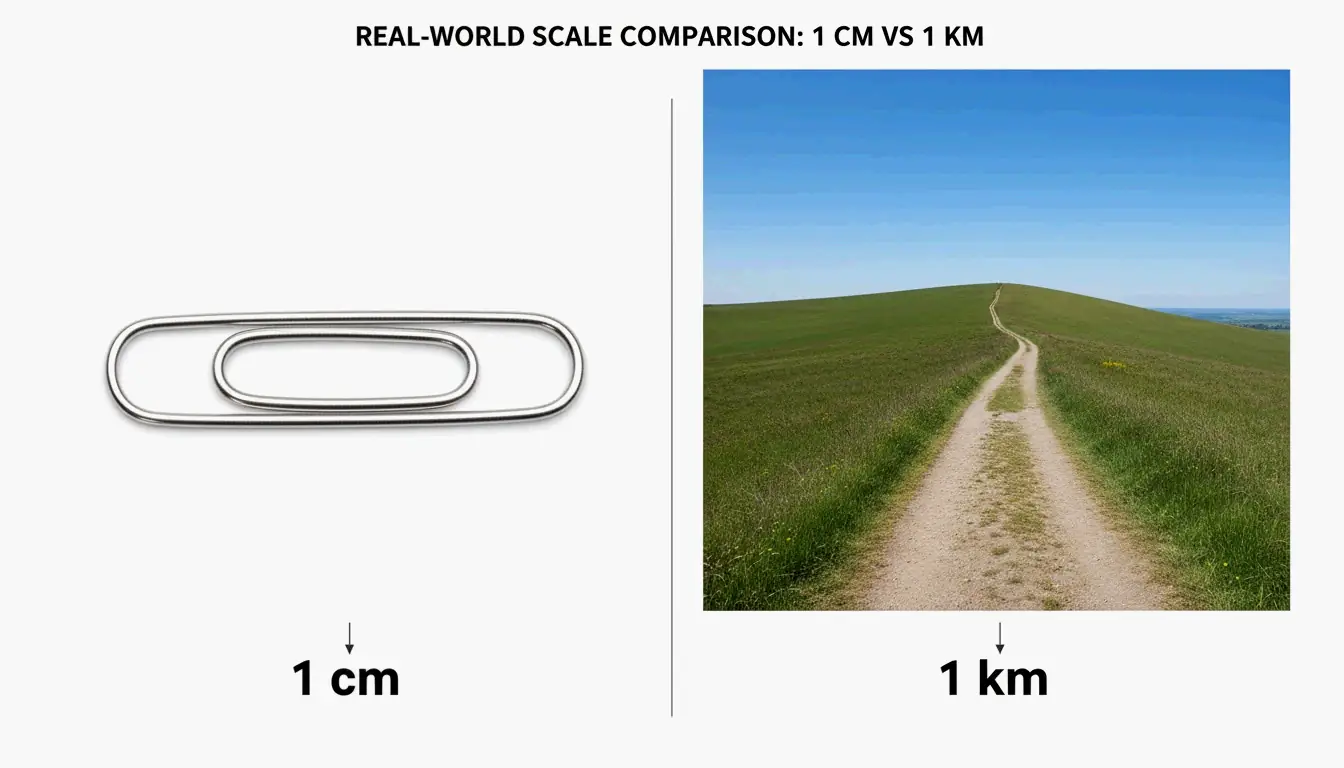
Ölçeği Görselleştirme
| Nesne | Ölçüm | Ölçek |
|---|---|---|
| Ataç kalınlığı | ~1 cm | Elde taşınabilir |
| Kalem genişliği | ~0,7 cm | Elde taşınabilir |
| 10 dakikalık hızlı yürüyüş | ~1 km | Navigasyonel |
| 1,5 km’lik yol bölümü | 150.000 cm | Navigasyonel |
Hız Dönüşümü: cm/s’den km/sa’ye
Santimetre/saniye (cm/s)‘yi kilometre/saat (km/sa)‘ye dönüştürmek için 0,036 ile çarpın.
| Formül | Türetme |
|---|---|
| km/sa = cm/s × 0,036 | (cm ÷ 100.000) × 3.600 saniye |
| cm/s | km/h |
|---|---|
| 1 cm/s | 0.036 km/h |
| 100 cm/s | 3.6 km/h |
| 1,000 cm/s | 36 km/h |
| 10,000 cm/s | 360 km/h |
| 100,000 cm/s | 3,600 km/h |
Bilimsel Gösterim Referansı
CoolConversion‘a göre, 90.000 cm = 9 × 10⁴ cm = 0,9 km. Çok küçük değerler için, 0,01 cm = 1 × 10⁻⁷ km.
Sonuç
cm’den km’ye = 100.000’e bölün (ondalık nokta 5 basamak sola). Hız için: cm/s × 0,036 = km/sa. Profesyonel veya bilimsel çalışmalarda NIST ve ISO 80000-3 standartlarına göre doğrulayın.
SSS
1 santimetre kaç kilometredir?
0,00001 km (1 × 10⁻⁵ km). Bu, NIST’e göre kesin bir metrik dönüşümdür.
cm ve km arasındaki dönüşüm faktörü nedir?
1/100.000 = 0,00001. cm’yi 0,00001 ile çarpın veya 100.000’e bölün.
cm/s’yi km/sa’ye nasıl dönüştürürüm?
cm/s’yi 0,036 ile çarpın. Formül: (cm ÷ 100.000) × 3.600 = km/sa.
Bu İngiliz imperial sistem dönüşümlerinden farklı mı?
Evet. cm’den km’ye dönüşüm tamamen metriktir (SI), onun kuvvetlerine dayanır. İngiliz birimleri (inç, feet, mil) ondalık olmayan faktörler kullanır ve tamamen farklı dönüşüm formülleri gerektirir.
SectoJoy
• Indie Hacker & DeveloperI'm an indie hacker building iOS and web applications, with a focus on creating practical SaaS products. I specialize in AI SEO, constantly exploring how intelligent technologies can drive sustainable growth and efficiency.