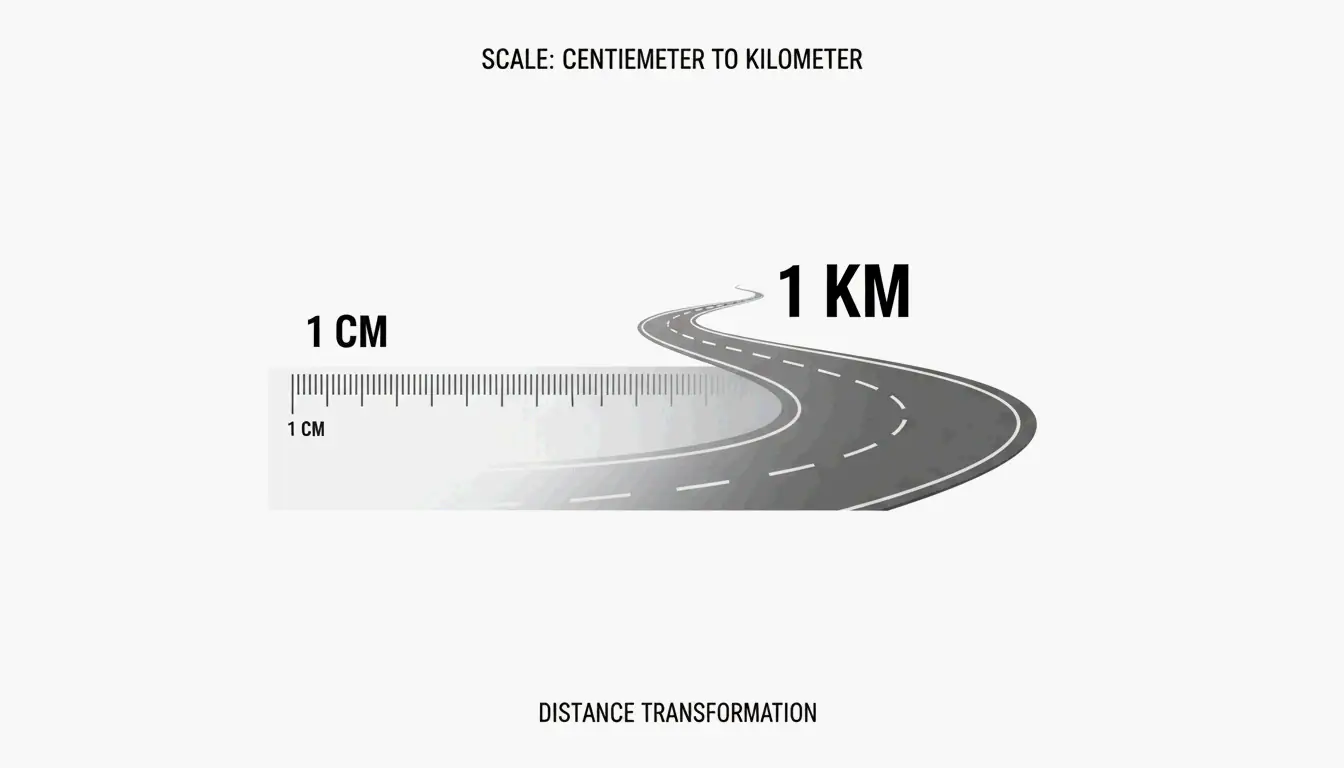
سینٹیمیٹر کو کلومیٹر میں کیسے تبدیل کریں: فارمولے، مثالیں اور بصری رہنما
سینٹیمیٹر (cm) کو کلومیٹر (km) میں تبدیل کرنے کے لیے، 100,000 سے تقسیم کریں۔ فارمولا km = cm ÷ 100,000 (یا km = cm × 0.00001)۔ مثال کے طور پر، 250,000 cm = 2.5 km۔ NIST کے مطابق، تبدیلی کا فیکٹر بالکل 10⁻⁵ ہے۔
تبدیلی کا فارمولا
| طریقہ | فارمولا | مثال |
|---|---|---|
| تقسیم | km = cm ÷ 100,000 | 500,000 cm = 5 km |
| ضرب | km = cm × 0.00001 | 500,000 cm = 5 km |
| اعشاریہ کی منتقلی | اعشاریہ نقطہ 5 مقامات بائیں منتقل کریں | 250,000 → 2.5 km |
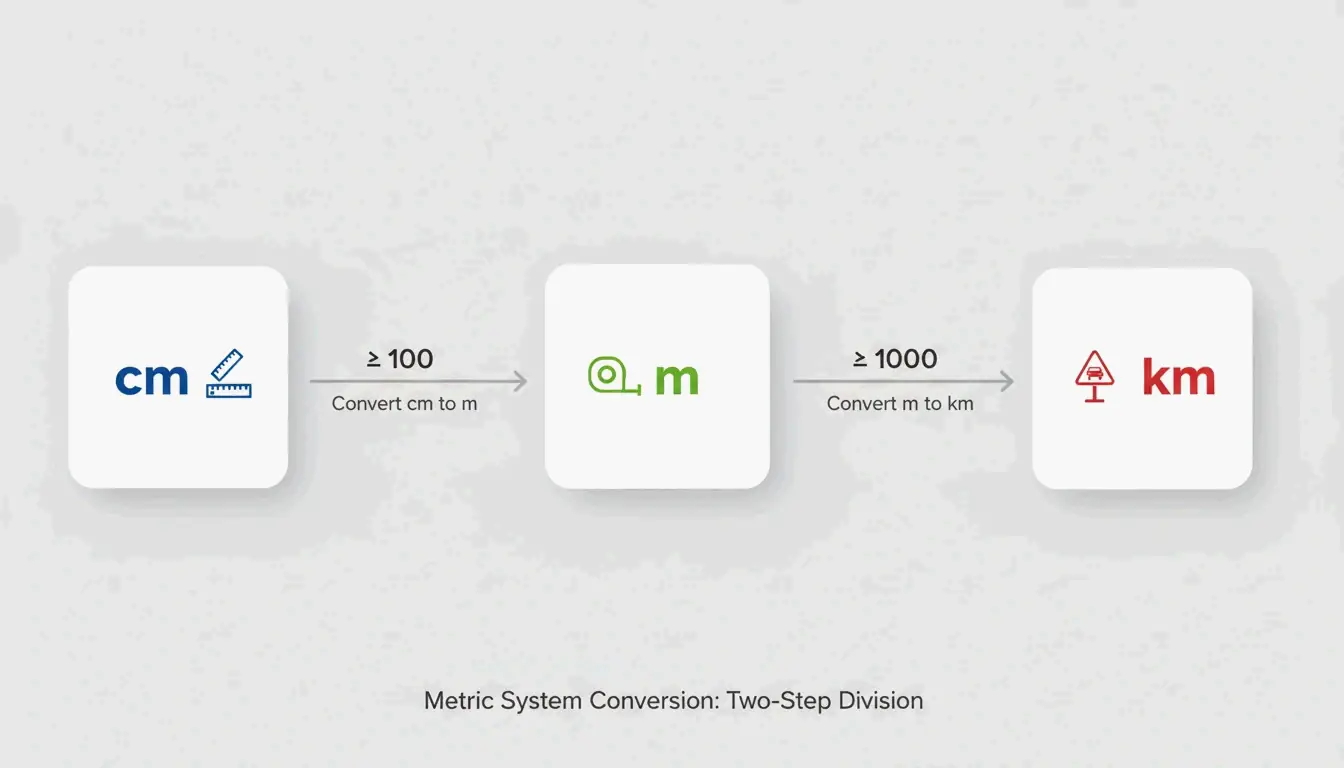
دو مرحلہ طریقہ (میٹر کے ذریعے)
- cm → m: 100 سے تقسیم کریں (مثلاً: 100,000 cm = 1,000 m)
- m → km: 1,000 سے تقسیم کریں (مثلاً: 1,000 m = 1 km)
فوری تبدیلی کی جدول
| Centimeters | Kilometers | Scientific Notation |
|---|---|---|
| 1 cm | 0.00001 km | 1 × 10⁻⁵ km |
| 100 cm | 0.001 km | 1 × 10⁻³ km |
| 1,000 cm | 0.01 km | 1 × 10⁻² km |
| 10,000 cm | 0.1 km | 1 × 10⁻¹ km |
| 45,000 cm | 0.45 km | 4.5 × 10⁻¹ km |
| 100,000 cm | 1 km | 1 × 10⁰ km |
| 250,000 cm | 2.5 km | 2.5 × 10⁰ km |
| 1,000,000 cm | 10 km | 1 × 10¹ km |
میٹرک سسٹم یہ پیمانہ کیوں استعمال کرتا ہے
میٹرک سسٹم اعشاریہ پر مبنی ہے، لمبائی کی اکائیوں کے لیے ISO 80000-3 کے زیرِ نگرانی۔ سینٹیمیٹر چھوٹی اشیاء (بٹن کی چوڑائی، پنسل کی موٹائی) ناپتا ہے۔ کلومیٹر جغرافیائی فاصلات (سڑک کی لمبائی، شہر سے شہر) ناپتا ہے۔ 100,000:1 کا تناسب دونوں پیمانوں کو قابلِ انتظام رکھتا ہے۔
رفتار کی تبدیلی: cm/s سے km/h
سینٹیمیٹر فی سیکنڈ (cm/s) کو کلومیٹر فی گھنٹہ (km/h) میں تبدیل کرنے کے لیے، 0.036 سے ضرب دیں۔
| فارمولا | اخراج |
|---|---|
| km/h = cm/s × 0.036 | (cm ÷ 100,000) × 3,600 سیکنڈ |
| cm/s | km/h |
|---|---|
| 1 cm/s | 0.036 km/h |
| 100 cm/s | 3.6 km/h |
| 1,000 cm/s | 36 km/h |
| 10,000 cm/s | 360 km/h |
| 100,000 cm/s | 3,600 km/h |
نتائج
cm سے km = 100,000 سے تقسیم کریں (اعشاریہ نقطہ 5 مقامات بائیں منتقل کریں)۔ رفتار کے لیے، cm/s کو 0.036 سے ضرب دے کر km/h حاصل کریں۔ پیشہ ورانہ یا سائنسی کام کے لیے، NIST اور ISO 80000-3 معیارات کے مطابق تصدیق کریں۔
اکثر پوچھے گئے سوالات
1 سینٹیمیٹر میں کتنے کلومیٹر ہیں؟
0.00001 km (1 × 10⁻⁵ km)۔ یہ NIST کے مطابق صحیح میٹرک تبدیلی ہے۔
cm اور km کے درمیان تبدیلی کا فیکٹر کیا ہے؟
1/100,000 = 0.00001۔ cm کو 0.00001 سے ضرب دیں یا 100,000 سے تقسیم کریں۔
cm/s کو km/h میں کیسے تبدیل کریں؟
cm/s کو 0.036 سے ضرب دیں۔ فارمولا: (cm ÷ 100,000) × 3,600 = km/h۔
کیا یہ امپیریل سسٹم کی تبدیلیوں سے مختلف ہے؟
ہاں۔ cm سے km خالص میٹرک (SI) ہے، دس کی طاقتوں پر مبنی۔ امپیریل اکائیاں (انچ، فٹ، میل) غیر اعشاریہ فیکٹرز استعمال کرتی ہیں اور بالکل مختلف تبدیلی کے فارمولے درکار ہوتے ہیں۔
SectoJoy
• Indie Hacker & DeveloperI'm an indie hacker building iOS and web applications, with a focus on creating practical SaaS products. I specialize in AI SEO, constantly exploring how intelligent technologies can drive sustainable growth and efficiency.