تحويل السنتيمتر إلى قدم وبوصات: الدليل الشامل وجدول الأطوال (2026)
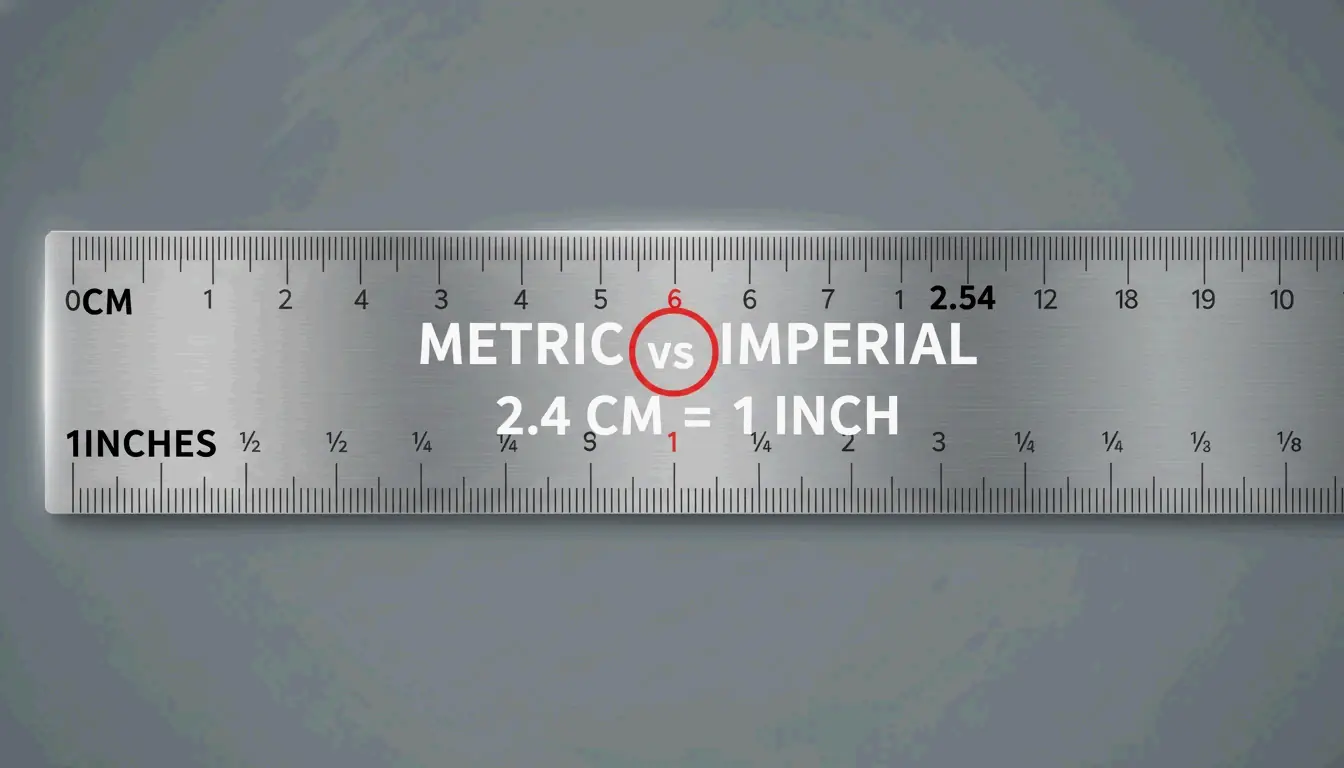
لـتحويل السنتيمتر إلى قدم وبوصات: قسّم السنتيمتر على 2.54 للحصول على إجمالي البوصات، ثم قسّم على 12 للحصول على القدم والباقي كبوصات. مثال: 180 سم = 70.87 بوصة = 5’10.9″. وفقاً لـ NIST SP 811، 1 قدم = 30.48 سم بالضبط، 1 بوصة = 2.54 سم بالضبط.
الصيغة من 3 خطوات
| الخطوة | العملية | مثال (180 سم) |
|---|---|---|
| 1. إجمالي البوصات | سم ÷ 2.54 | 180 ÷ 2.54 = 70.866 بوصة |
| 2. القدم | إجمالي البوصات ÷ 12 (العدد الصحيح) | 70.866 ÷ 12 = 5 قدم |
| 3. البوصات المتبقية | الجزء العشري × 12 | 0.866 × 12 = 10.4 بوصة |
| النتيجة | — | 5’10.4″ |
بديل للخطوة 3: (السم الأصلي − القدم × 30.48) ÷ 2.54 = البوصات المتبقية.
لا تقم أبداً بتقريب 2.54 إلى 2.5 — فهذا يُنشئ خطأً بنسبة 1.6% يتراكم في أعمال البناء والسجلات الطبية.
جدول الأطوال: السنتيمتر إلى قدم وبوصات
| السنتيمتر | القدم والبوصات (مقرّبة) | النظام الإمبريالي الدقيق | السياق |
|---|---|---|---|
| 150 سم | 4’11” | 4’11.06″ | — |
| 155 سم | 5’1″ | 5’1.02″ | — |
| 159 سم | 5’3″ | 5’2.99″ | المتوسط العالمي للإناث |
| 160 سم | 5’3″ | 5’2.99″ | — |
| 165 سم | 5’5″ | 5’4.96″ | — |
| 170 سم | 5’7″ | 5’6.93″ | — |
| 171 سم | 5’7″ | 5’7.32″ | المتوسط العالمي للذكور |
| 175 سم | 5’9″ | 5’8.90″ | — |
| 180 سم | 5’11” | 5’10.87″ | — |
| 185 سم | 6’1″ | 6’0.83″ | — |
| 190 سم | 6’3″ | 6’2.80″ | — |
| 200 سم | 6’7″ | 6’6.74″ | — |
متوسطات الطول وفقاً لـ GIGAcalculator.
التغير اليومي في الطول
يكون البشر في أطول طولهم في الصباح، ويمكن أن ينخفضوا بما يصل إلى 1 سم (0.39 بوصة) بحلول المساء نتيجة ضغط الأقراص الفقرية بسبب الوقوف.
القدم العشرية ≠ قدم + بوصات
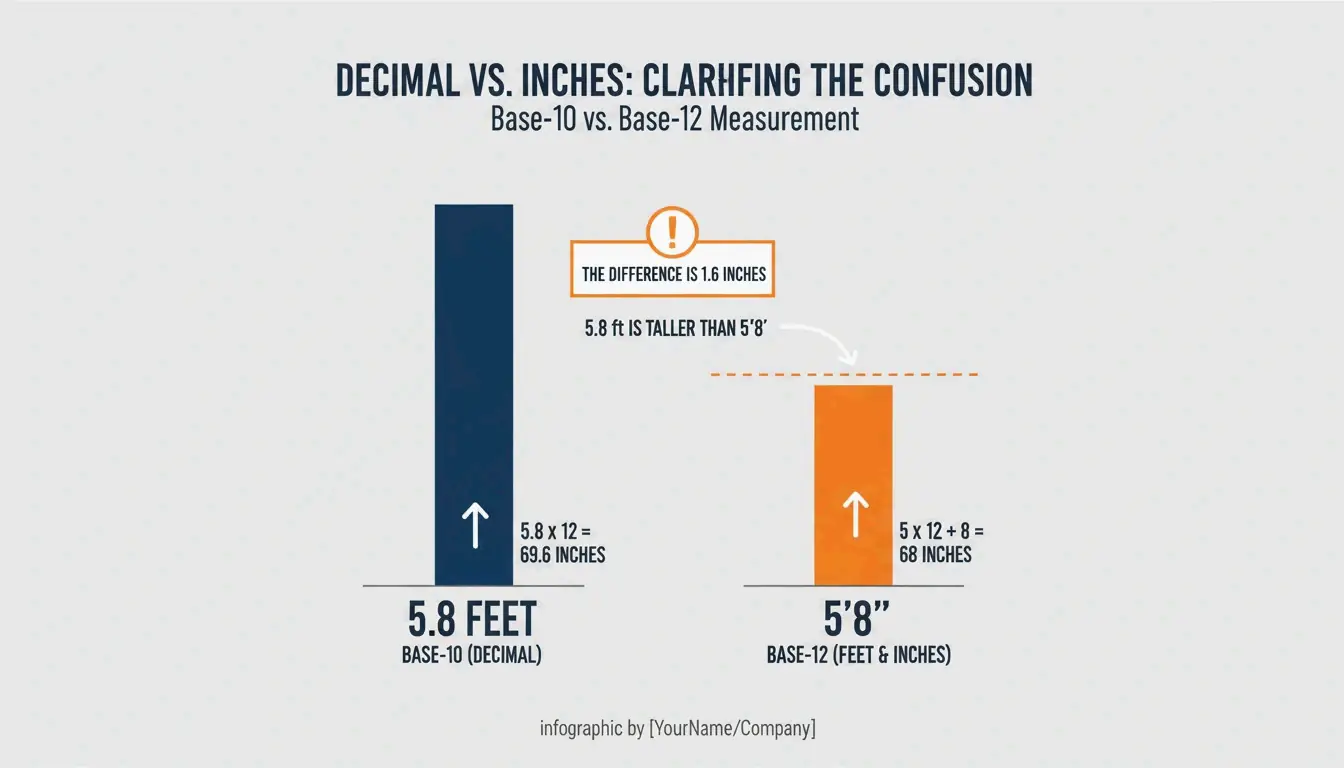
فخ خطير: 5.8 قدم هي ليست 5’8″ — بل هي 5’9.6″ (0.8 × 12 = 9.6 بوصة).
| تم قراءتها كـ | الواقع | الفارق |
|---|---|---|
| 5.8 قدم تُقرأ كـ 5’8″ | في الواقع: 5’9.6″ | +1.6 بوصة |
| 6.1 قدم تُقرأ كـ 6’1″ | في الواقع: 6’1.2″ | +0.2 بوصة |
| 5.5 قدم تُقرأ كـ 5’5″ | في الواقع: 5’6.0″ | +1.0 بوصة |
تحويل البوصات العشرية إلى كسور (للبناء)
لشرائط القياس الأمريكية (أساس 16):
| البوصات العشرية | × 16 | الكسر |
|---|---|---|
| 0.25 بوصة | 4/16 | 1/4″ |
| 0.50 بوصة | 8/16 | 1/2″ |
| 0.75 بوصة | 12/16 | 3/4″ |
| 0.0625 بوصة | 1/16 | 1/16″ |
| 0.4375 بوصة | 7/16 | 7/16″ |
اضرب الجزء العشري في 16، قرّب إلى أقرب عدد صحيح، ثم بسّط الكسر.
المعايير: اتفاقية 1959 والقدم المساحية الأمريكية
| المعيار | التعريف | الحالة (2026) |
|---|---|---|
| القدم الدولية | 1 قدم = 30.48 سم بالضبط | ساري |
| البوصة الدولية | 1 بوصة = 2.54 سم بالضبط | ساري |
| القدم المساحية الأمريكية | فرق ~2 جزء في المليون عن الدولية | أُلغيت في 1 يناير 2023 وفقاً لـ NIST |
المتر مُعرَّف بسرعة الضوء (299,792,458 م/ث) وفقاً لـ BIPM.
عملي: تحويل الأثاث والمنزل (IKEA)
| العنصر | المتري (سم) | الإمبريالي | المعيار الأمريكي | الفارق |
|---|---|---|---|---|
| سرير كوين أوروبي | 160 سم عرض | 62.99 بوصة | كوين أمريكي: 60 بوصة | +3 بوصات أعرض |
| سقف أوروبي | 250 سم | 8’2.4″ | سقف أمريكي: 8′ (243.84 سم) | +2.4 بوصة أعلى |
| باب قياسي | 200 سم | 6’6.7″ | باب أمريكي: 6’8″ (203.2 سم) | −2.5 بوصة أقصر |
يجب على المقاولين استخدام معامل 2.54 الدقيق عند تركيب الخزائن أو الأجهزة المستوردة.
توقع طول الطفل
| الطريقة | الدقة | المتطلبات |
|---|---|---|
| طريقة المضاعف (Paley وآخرون) | 85% ضمن 5 سم | الطول الحالي للطفل + العمر |
| Khamis-Roche | أكثر دقة | يتطلب طول كلا الوالدين |
وفقاً لـ GIGAcalculator، تعمل طريقة المضاعف عبر المجموعات العرقية وتحتاج مدخلات أقل.
الخلاصة
سم → إجمالي البوصات (÷2.54) → القدم (÷12) + البوصات المتبقية. لا تخلط أبداً بين القدم العشرية والقدم+بوصات. للبناء، حوّل البوصات العشرية إلى كسور بأساس 1/16. للأثاث المستورد، تحقق من الأبعاد الدقيقة بالسنتيمتر مقابل المعايير الأمريكية قبل الشراء.
الأسئلة الشائعة
لماذا 5.8 قدم ليست نفس 5’8″؟
القدم تستخدم النظام العشري (أساس 10) لكن البوصات تستخدم أساس 12. اضرب الجزء العشري في 12: 0.8 × 12 = 9.6 بوصة. إذن 5.8 قدم = 5’9.6″، أي أطول بحوالي 2 بوصة من 5’8″.
ما هو متوسط الطول العالمي؟
وفقاً لـ GIGAcalculator: الذكور 171 سم (5’7″)، الإناث 159 سم (5’3″). يتفاوت بشكل كبير حسب المنطقة.
كيف أحوّل البوصات العشرية إلى كسور للبناء؟
اضرب الجزء العشري في المقام المطلوب (16 لكسور 1/16)، قرّب إلى أقرب عدد صحيح، ثم بسّط. مثال: 0.75 × 16 = 12/16 = 3/4 بوصة.
SectoJoy
• Indie Hacker & DeveloperI'm an indie hacker building iOS and web applications, with a focus on creating practical SaaS products. I specialize in AI SEO, constantly exploring how intelligent technologies can drive sustainable growth and efficiency.