Why Your Content Needs a Handwritten Feel: Trust Signals in the AI Era
Generic AI content is a zero-cost commodity in 2026. To build trust, you need human-exclusive signals: lived experience, specific contextual judgment, and a unique personal voice. Data shows 52% of readers stop reading once they detect purely AI-generated content — making authenticity a measurable business advantage.
Trust Scarcity: The Data Behind the Problem
Ahrefs 2025 data shows 74.2% of new web pages contain AI-generated text. The result: readers have developed “blindness” to standard marketing copy.
| Metric | Value | Source |
|---|---|---|
| Web pages with AI text | 74.2% | Ahrefs 2025 |
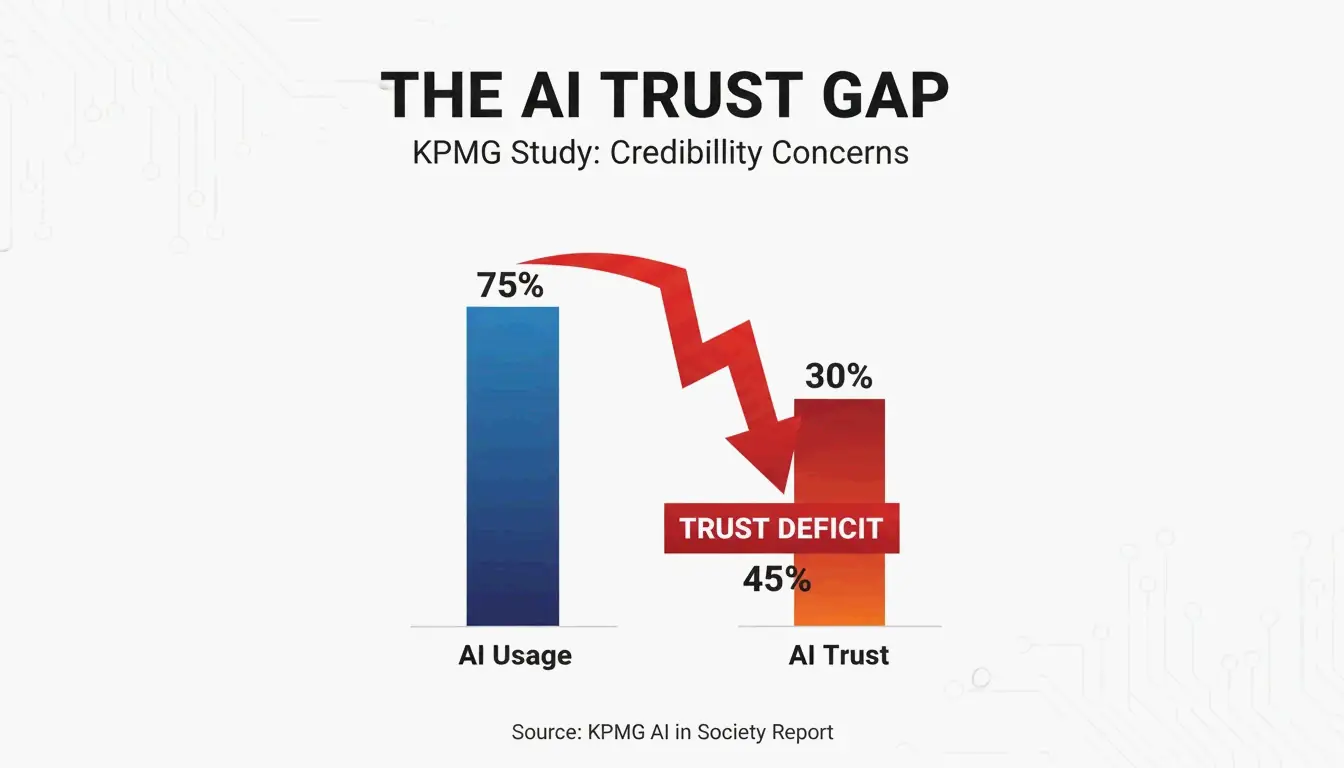
| People who use AI regularly | 66% | KPMG 2025 |
| People who trust AI output | 46% | KPMG 2025 |
| Readers who abandon pure AI content | 52% | White Beard Strategies 2026 |
The gap between usage (66%) and trust (46%) is the core problem. When readers detect a “bot” behind the screen, they discount the author’s credibility immediately.
Competent Mediocrity: The Statistical Average Trap
AI models converge toward the statistical middle. As Lilian Makena notes, AI polishes away the quirks and rhythms that make a voice recognizable. The output is grammatically perfect but indistinguishable from thousands of other articles on the same topic.
What Creates the ‘Handwritten’ Signal?
A “handwritten feel” is not about fonts. It is about showing the friction of real human thought — the kind of evidence that only comes from doing the work.
Proof of Work: The Trust Mechanism
Jonathan Mast shares a case study: a founder posted polished AI content daily for three months. Result: 1,200 followers, $0 in revenue. The volume was there, but the human proof wasn’t.
| AI-Only Content | Human-Proof Content |
|---|---|
| General best practices | Specific failures and lessons learned |
| Statistical average advice | Counterintuitive opinions from experience |
| Generic examples | First-person anecdotes with real outcomes |
| “Safe” recommendations | Recommendations that carry personal risk |
The Skin in the Game Audit
Before publishing, ask: Could a competitor using the same AI tools produce this exact piece? If yes, the content lacks the human risk signal that builds trust. Content that builds credibility costs the creator something — a controversial stance, a vulnerable mistake, or a counterintuitive opinion.
Tiered Protocol: Human vs. AI Balance by Content Type
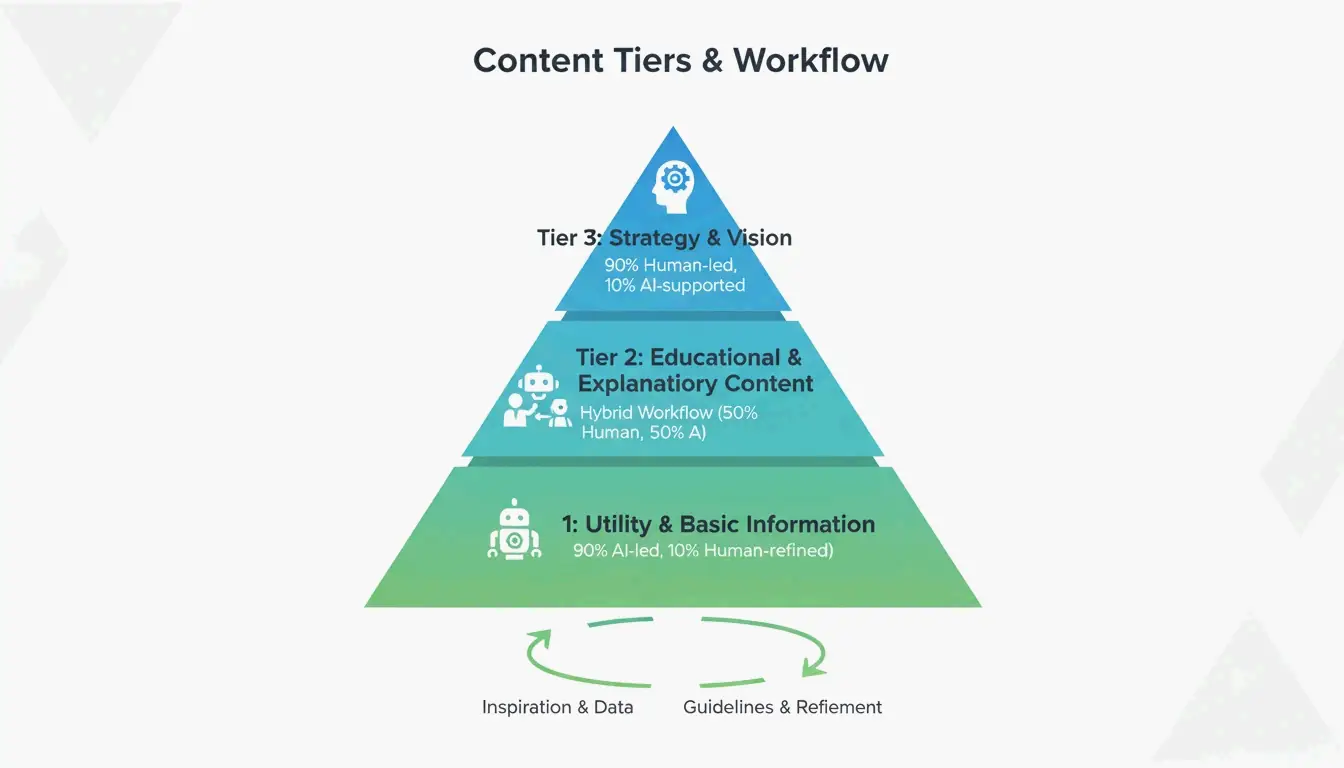
| Tier | Content Type | Human/AI Split | Requirement |
|---|---|---|---|
| Tier 1 | Strategy, opinion, thought leadership | 90% human-led | Voice anchor before AI touches the draft |
| Tier 2 | Educational how-to guides | Human-anchored, AI-supported | Expert adds authenticity signals + real data |
| Tier 3 | Product descriptions, summaries | AI-led, human-verified | Human checks accuracy and brand tone |
This hybrid workflow lets you scale production without compromising the high-stakes content that closes sales.
Cost Per Quality Unit: The Metric That Matters
“Cost Per Word” is obsolete when words are infinite and free. The new metric is Cost Per Quality Unit — how much it costs to produce content that actually converts.
The “Trust Tax” from AI-only content: 52% of consumers stop reading once they detect pure AI output (White Beard Strategies). This leads to fewer leads and longer sales cycles.
Measurement: Track “Attribution by Anecdote” — how often a lead mentions a specific story or unique take from your content during a sales call. This directly correlates trust-building content to revenue.
Voice Anchoring: Scaling Without Losing Authenticity
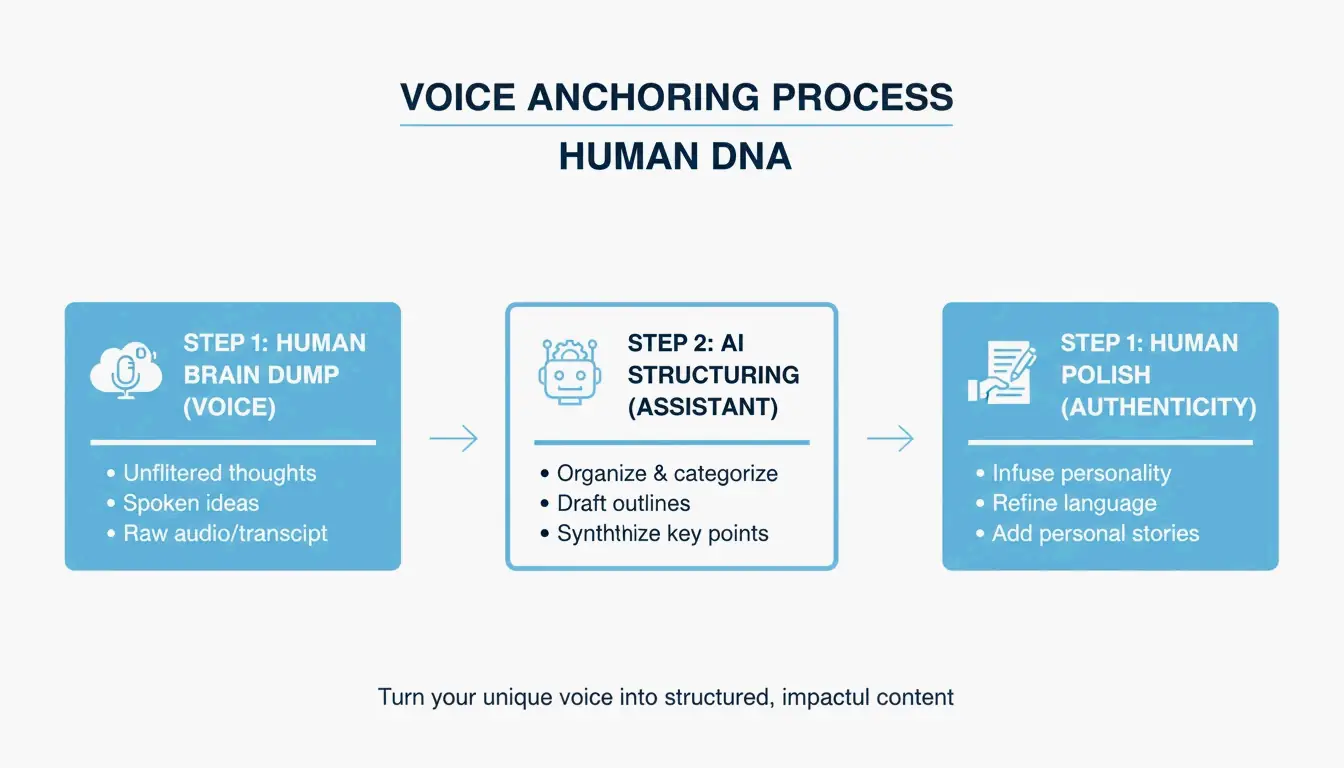
- Record a 2-minute “brain dump” of your unique thoughts on the topic (voice-to-text or interview).
- Use AI as a research librarian to find supporting data, or as a formatting assistant to organize your thoughts.
- Preserve the human perspective as the DNA of the final piece — the viewpoint must come from you.
As Invoke Media notes, authentic content proves you understand a client’s specific reality rather than repeating publicly available information.
Conclusion
In 2026, your only competitive edge in content is the “handwritten feel” — the specific, lived reality of human expertise. Apply the tiered protocol: keep Tier 1 content 90% human-led, use voice anchoring to scale, and measure results with Cost Per Quality Unit rather than Cost Per Word.
Immediate action: Audit your top 10 pages. Find one generic, AI-sounding section in each and replace it with a specific case study, a personal lesson, or a unique opinion.
FAQ
Can I train an AI persona to sound like me and still maintain trust?
AI can mimic your sentence structure and vocabulary, but it cannot replicate lived experience. Use AI to mirror your structure, then inject a “human anchor” — a story or specific observation only you know. Trust requires current judgment that AI’s training data doesn’t contain.
How do I measure ROI of trust-building content vs. high-volume SEO posts?
Shift from “Traffic” to “Conversion Intent” and “Sales Cycle Length.” High-trust content produces fewer visitors but higher-quality leads further along the buyer’s journey. Track “Attribution by Anecdote” — instances where a prospect references a specific take from your content during a sales call.
What authenticity markers do search engines and readers look for in 2026?
Search engines prioritize “Information Gain” — new, non-training-data insights added to the web. Readers look for “First-person specificity” (I, We, Our) backed by unique data or real-world photos. A consistent perspective that occasionally disagrees with the AI statistical average is the strongest human-expert signal.
SectoJoy
• Indie Hacker & DeveloperI'm an indie hacker building iOS and web applications, with a focus on creating practical SaaS products. I specialize in AI SEO, constantly exploring how intelligent technologies can drive sustainable growth and efficiency.