Timezone Converter: Accurate Global Time Scheduling with UTC and DST Handling
A professional timezone converter must sync with the IANA Time Zone Database (400+ zones), apply Daylight Saving Time (DST) automatically, and calculate UTC offsets down to the minute—including non-standard offsets like UTC+5:30 (India) and UTC+5:45 (Nepal). Tools like Time.now pair this data with visual meeting planners for reliable cross-timezone scheduling.
3-Step Workflow: Select, Sync, Schedule
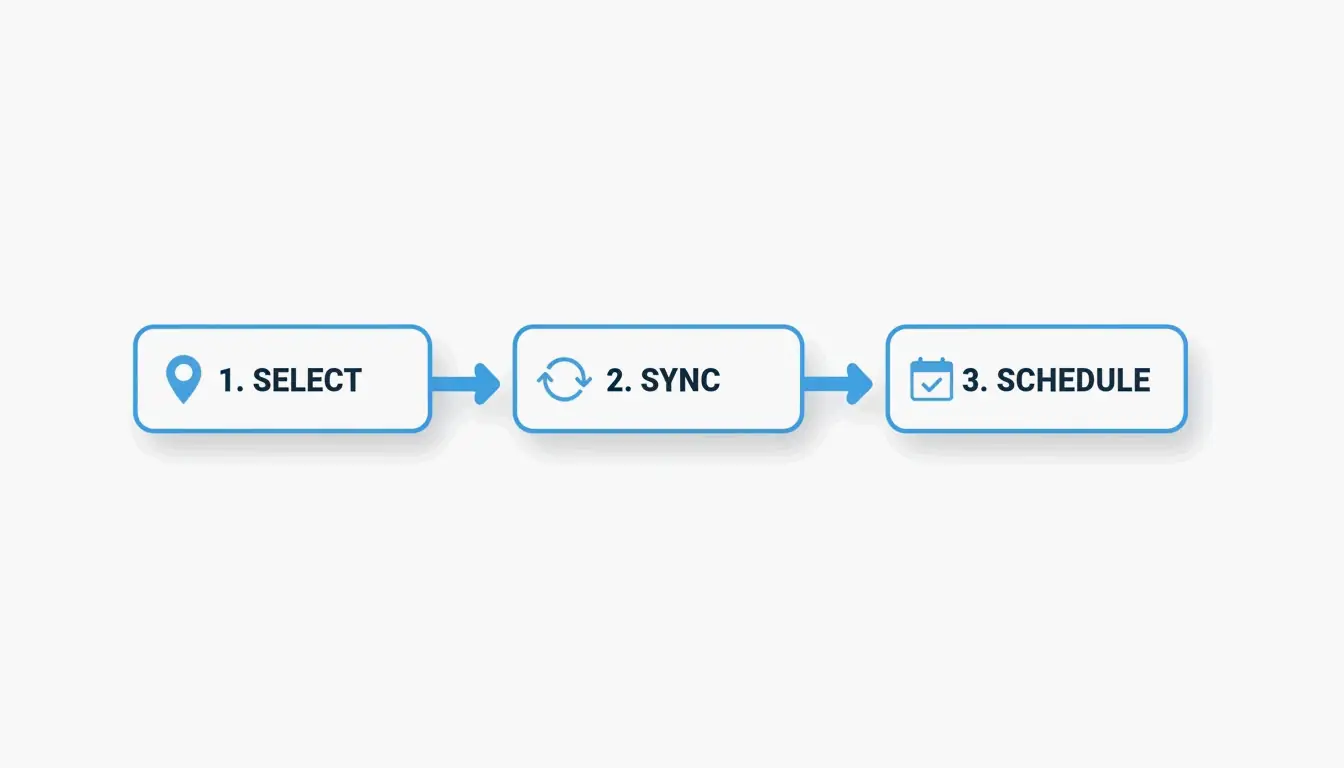
| Step | Action | Why It Matters |
|---|---|---|
| Select | Choose source and target timezones | IANA database tracks 400+ zones worldwide |
| Sync | Apply UTC offset + current DST status | 62 locations observe DST as of May 2026 |
| Schedule | Find overlapping “Golden Hours” | Avoids midnight meetings and zoom fatigue |
Step 1: Establish the UTC Baseline
UTC (Coordinated Universal Time) never shifts for DST. Use it as your anchor: Local Time = UTC + Offset + DST Adjustment. This formula stays correct even when local laws change clock rules.
Step 2: Automate DST Adjustments
As of May 7, 2026, Time and Date confirms 62 locations are observing DST. A reliable converter handles these shifts automatically—London switches between GMT (UTC+0) and BST (UTC+1) without manual intervention.
Step 3: Find Golden Hours
“Golden Hours” are overlapping windows where all participants are within working hours. For teams spanning EST (New York), PST (California), IST (India), and JST (Japan), visual grid planners highlight these slots instantly.
UTC vs. GMT: Technical Distinction
| Property | UTC | GMT |
|---|---|---|
| Definition | Atomic time standard | Time zone for UK/Europe/Africa |
| Precision | Millisecond-level | Second-level |
| DST affected | Never | Yes (UK switches to BST in summer) |
| Required for | Aviation, finance, servers | General scheduling in UK/Africa |
As 24TimeZones notes, UTC and GMT are functionally identical for casual use. For technical logs, financial trades, and Unix systems, UTC is the required standard. Unix Time counts seconds since January 1, 1970 (Epoch), giving servers a timezone-independent reference.
DST Status in 2026: What Still Changes
Despite legislative efforts like the U.S. Sunshine Protection Act and EU proposals to end biannual clock changes, DST remains active in many regions.
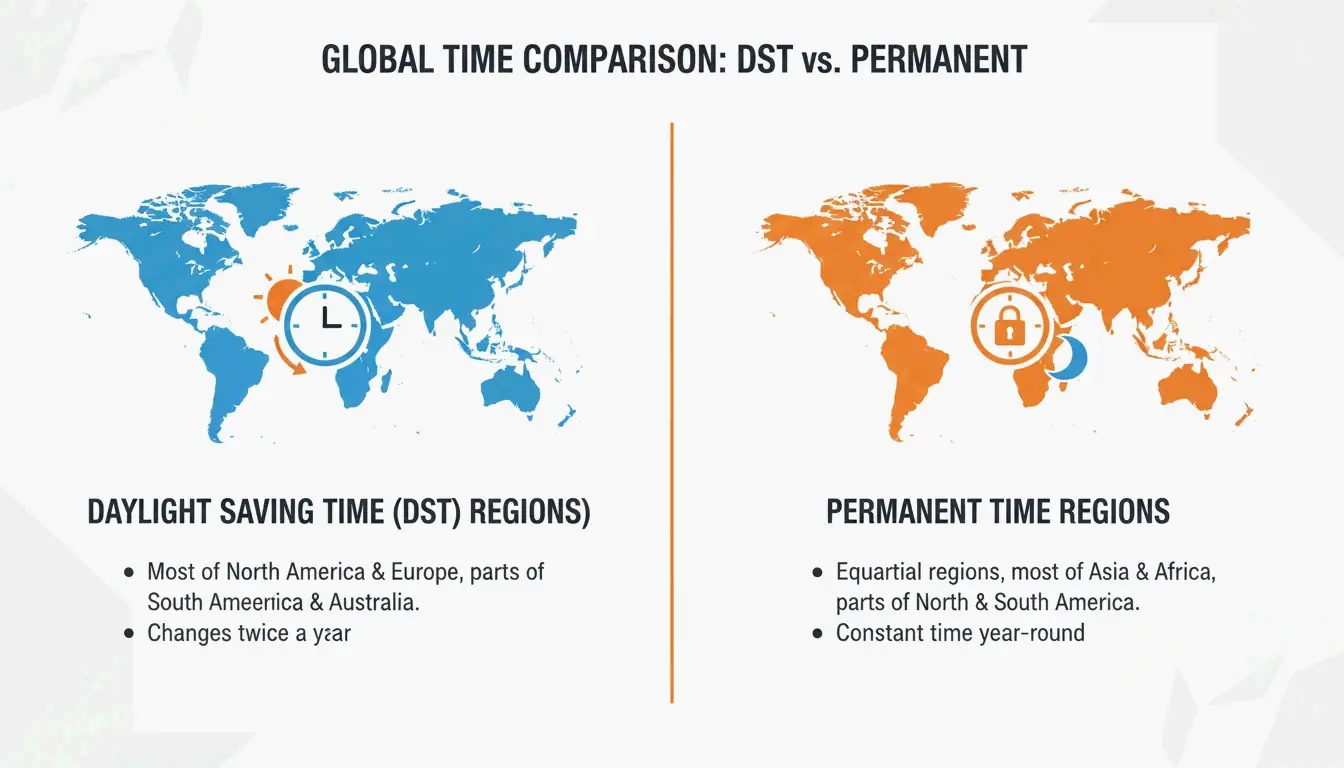
| Category | Regions | DST Status (May 2026) |
|---|---|---|
| DST active | US, Canada, EU, parts of Australia | +1 hour offset applied |
| Permanent Time | Arizona (US), China, India, Japan, most of Africa/Africa | No seasonal shift |
When using a converter, look for a “Permanent Time” label to confirm a location does not shift clocks.
Non-Standard Timezone Offsets
Not all timezones shift by whole hours. Common non-standard offsets:
| Offset | Region | Note |
|---|---|---|
| UTC+5:30 | India (IST) | 30-minute offset |
| UTC+5:45 | Nepal (NPT) | 45-minute offset |
| UTC+9:30 | Australia (ACST) | Northern Territory, South Australia |
| UTC+3:30 | Iran (IRST) | 30-minute offset |
Always verify these zones when scheduling “on the hour” — a meeting set for 9:00 AM in New York is 6:30 PM in Mumbai, not 7:00 PM.
AI-Powered Timezone Workflows
Modern teams use AI Time Assistants to eliminate manual conversion:
- Natural language scheduling: “Schedule a 30-minute sync with Tokyo and London for next Tuesday morning” — the AI checks IANA data and finds the best overlap automatically.
- Slack/Teams integration: Auto-update your status based on local time and working hours.
- Offline sync: Apps like World Clock: Timezone Converter cache timezone data for use without Wi-Fi.
For high-stakes coordination — like the Hubble 36th Anniversary scientific event — synchronized time standards are non-negotiable across global observatories.
Conclusion
Use an IANA-backed timezone converter that applies UTC offsets and DST adjustments automatically. For team scheduling, a visual “Golden Hours” planner outperforms a basic converter by showing overlapping working windows. For the highest throughput, integrate an AI Time Assistant into your existing Slack or Teams workflow. Always double-check non-standard offsets (UTC+5:30, UTC+5:45) before confirming meeting times.
FAQ
What is the difference between GMT and UTC?
UTC is an atomic time standard with millisecond precision, used globally by technology and science. GMT is a specific timezone used by the UK (in winter) and parts of Africa. For scheduling, they are functionally identical. For aviation, finance, and server logs, UTC is the required standard.
Which countries do not observe DST?
Most of Asia (China, India, Japan), Africa, and South America do not observe DST. In the US, Arizona (except the Navajo Nation) stays on standard time year-round. Look for a “Permanent Time” label in your converter to confirm.
How do 30-minute and 45-minute timezone offsets work?
Regions like India (UTC+5:30) and Nepal (UTC+5:45) use fractional offsets. Modern converters using the IANA database handle these automatically. When scheduling across these zones, double-check the exact local time — a one-hour scheduling assumption can put you 30 minutes late.
SectoJoy
• Indie Hacker & DeveloperI'm an indie hacker building iOS and web applications, with a focus on creating practical SaaS products. I specialize in AI SEO, constantly exploring how intelligent technologies can drive sustainable growth and efficiency.